Social media is wild and I have a love-hate relationship with it. The algorithm force-feeds you what it decides you want to consume and someone else’s feed will look like a totally different reality. I am not going to try and understand it; I am 45 and kind of hoping it will all go away. I don’t think it will, but a boy can dream.
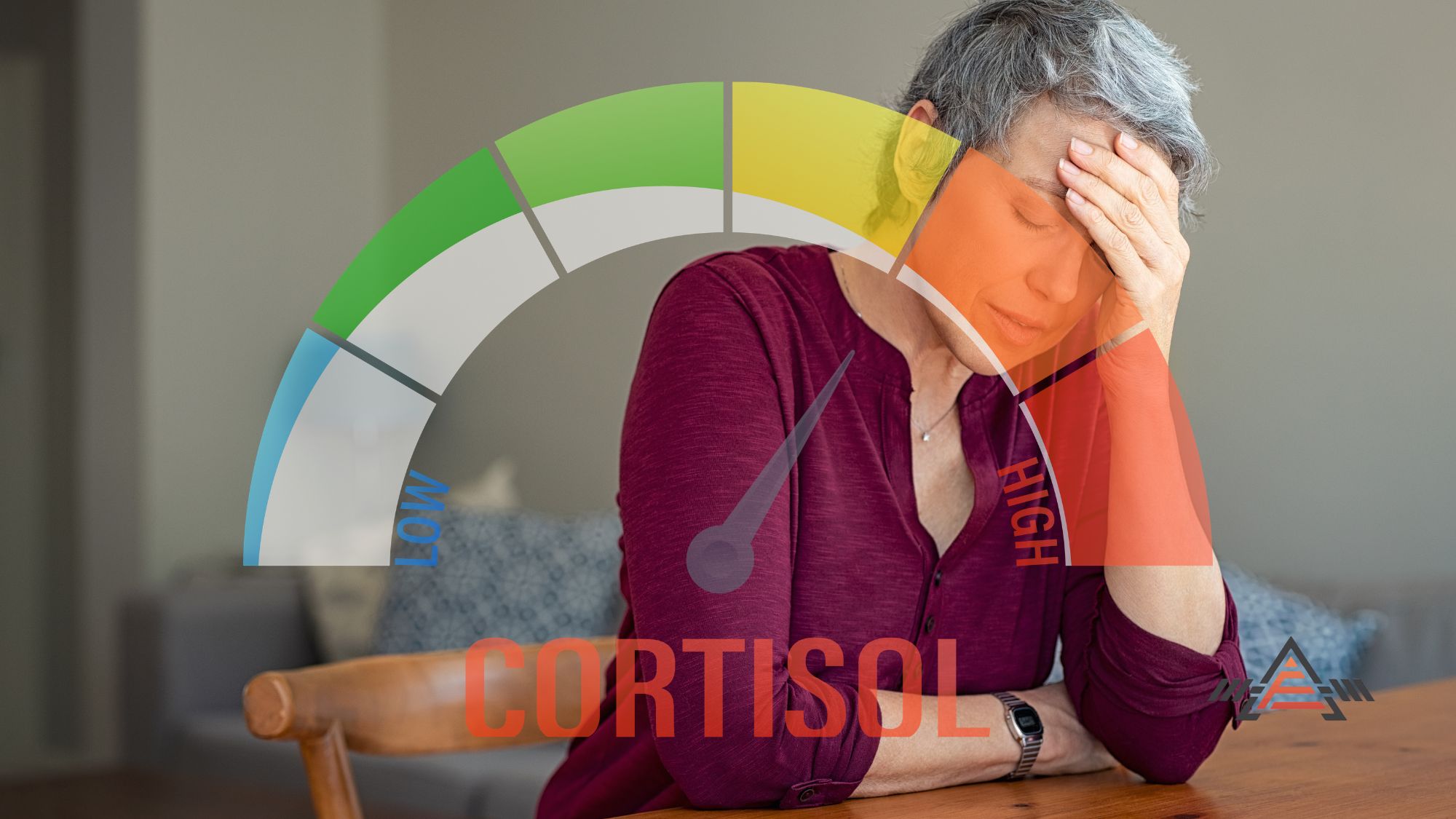
My point is that I have been hearing about influencers, who I have never seen due to the algorithm, talking about HIIT training spiking cortisol in perimenopausal women and the impact on things like belly fat. This statement has some granular truth, which is why people may latch on, but there is way more to the story.
Remember, a big following does not mean someone actually knows what they are talking about. I am not a doctor, or a woman, so you have a right to be skeptical about what I am saying as well, but I do everything I can to put out information with a foundation in peer reviewed scientific research.
What I can say is that at Ardent, we want people to live their best lives, and you need information to do that.
This is what we do, and this is our mission. Now, let’s talk about exercise, cortisol, and the impact it has on the body.
Yes, hard exercise raises cortisol
A study at the University of North Carolina had people exercise at 40, 60, and 80% of their max aerobic capacity. This study showed cortisol rose at 60 and 80%, but not 40%. They actually found, after correcting for time of day, it actually dropped at 40%. So, intensity drives the response. Intervals are hard efforts, so they will raise it. [1]
This study was done on 12 men. I went looking for something similar with female subjects and found one. A 2004 study put women in their 20s and women in their 60s through hard treadmill work. Cortisol went up in both groups, and the older women’s response looked about the same as the younger women’s. [2]
Very simply put, cortisol is what gets fuel into your bloodstream when you need it to work, then it comes back down. The issue is not cortisol; the issue is the impact of abnormal cortisol levels. High cortisol can result in weight gain, muscle weakness, and high blood pressure. [3] Chronic stress, like when your job follows you home, poor sleep, and other factors of contemporary life can add to sustained cortisol levels. [4] A few intense workouts a week or short interval sessions could possibly add to it but there is a strong possibility it is everything else keeping it high.
Cortisol belly
At the start of the 21st century, a Yale study added to the current cortisol conversation. The researchers put 59 premenopausal women through stressful lab tasks and the women who had more fat at the waist reported more chronic stress and released more cortisol. [5] This study tested psychological stress in women before menopause at a single point in time and had nothing to do with working out over an extended period of time.
Social media took some string and stitched two things together, not even in a decent stitching pattern, so we are going to pull it apart. Yes, exercise can raise cortisol. Yes, cortisol is linked to belly fat. Take a few jumps and you have “HIIT gives you belly fat.” This is not the conclusion research connected; it was the conclusion some people have poorly stitched together.
What is HIIT (according to researchers)
In the trials below, HIIT was 20 minutes on a bike: 8 seconds at a tough pace, 12 seconds easy, sixty times. [6][7] This is a different kind of work than a lot of gyms actually do.
Here is an example of what Ardent did today:
Started with a warm-up and skill which went from minute zero until minute 17. Then moved into building to a heavy power clean for the day. This is done by a single rep every 90 seconds over 10 total lifts.
So far we are still not close to the description of HIIT in the cited research. After the strength, we did a primer to prepare for the next part of the workout. Once that was complete, adjustments were made for each individual athlete to get the right response from the next part of the session.
This next part is more related to HIIT but there is more to it than intervals.
We put 12 minutes on the clock and athletes did as many rounds as possible of:
- 12 or 9 Calories on the bike
- 12 Deadlifts
- 9 Hang power cleans
- 36 Double Unders (when jump rope passes under your feet twice)
The double unders increased by 12 each round.
We were looking for athletes to achieve 4+ total rounds in this piece, so at least a round every 3 minutes. They needed to be off the bike within 55 seconds to make this happen.
After this there is a cool-down, logging of scores, high fives, and debrief.
This 60-minute session does not reflect the same response as 8 seconds of tough biking and 12 easy for 20 minutes.
Impacts of HIIT on women
In 2020, there was a study with overweight women. They trained three days a week for 12 weeks doing steady-state cardio, HIIT, or HIIT plus strength. Every group lost total fat. The HIIT groups lost significant belly and visceral fat, but only the HIIT plus strength significantly improved muscle mass. [6]
What do we say about strong people? Cue Mark Rippetoe
There was an earlier trial with postmenopausal women with type 2 diabetes using intervals or steady-state cardio twice a week for 16 weeks with no change in diet. Out of these two groups, only the interval group lost a significant amount of belly fat. [7]
These were small trials, but a meta-analysis found that HIIT cut fat in women overall, but it was only significant before menopause. [8] Postmenopausal evidence is scant but one thing it does not show is HIIT making belly fat worse.
Some things to consider
Perimenopause can destroy sleep for many women [9] and sleep is where you recover (see our Vitality series). Sleep five hours a night and wreck yourself in a 30-minute bootcamp six days a week and you will feel like shit. Your performance will drop and so will your results. There is an easy fix to this and it is to focus on the dose of exercise and the recovery. You need to build a system.
How to start
- Add one or two interval sessions a week, built around strength work.
- Use the bike or rower since cycling intervals look more effective post-menopause [8]
- If sleep and energy start to tank, cut hard days before intensity
- Lift weights. Women who paired HIIT with strength won out when it came to muscle. [6]
If you have a heart condition or health issue, check with your doctor before starting an exercise routine.
In our small group classes, we scale intensity to you. New or coming back? We can help you get started safely and remove the pitfalls of trying to start on your own.
Bottom line
HIIT, like any hard effort, is going to raise your cortisol. The idea that women over 40 should avoid it doesn’t hold up when you look at the actual research. Train hard a couple times a week, focus on recovery, and don’t let influencers dictate your program, or find some influencers who are credentialed enough to pay attention to, ideally more credentialed than me. I can just read research but there are plenty of women with all of the letters behind their name who can be sought out to talk about this.
References
- Hill EE, Zack E, Battaglini C, Viru M, Viru A, Hackney AC. (2008). Exercise and circulating cortisol levels: The intensity threshold effect. Journal of Endocrinological Investigation, 31(7), 587-591. https://doi.org/10.1007/BF03345606
- Traustadóttir T, Bosch PR, Cantu T, Matt KS. (2004). Hypothalamic-pituitary-adrenal axis response and recovery from high-intensity exercise in women: Effects of aging and fitness. Journal of Clinical Endocrinology & Metabolism, 89(7), 3248-3254. https://doi.org/10.1210/jc.2003-031713
- Nieman LK, Biller BMK, Findling JW, Newell-Price J, Savage MO, Stewart PM, Montori VM. (2008). The diagnosis of Cushing’s syndrome: An Endocrine Society clinical practice guideline. Journal of Clinical Endocrinology & Metabolism, 93(5), 1526-1540. https://doi.org/10.1210/jc.2008-0125
- Miller GE, Chen E, Zhou ES. (2007). If it goes up, must it come down? Chronic stress and the hypothalamic-pituitary-adrenocortical axis in humans. Psychological Bulletin, 133(1), 25-45. https://doi.org/10.1037/0033-2909.133.1.25
- Epel ES, McEwen B, Seeman T, Matthews K, Castellazzo G, Brownell KD, Bell J, Ickovics JR. (2000). Stress and body shape: Stress-induced cortisol secretion is consistently greater among women with central fat. Psychosomatic Medicine, 62(5), 623-632. https://doi.org/10.1097/00006842-200009000-00005
- Dupuit M, Rance M, Morel C, Bouillon P, Pereira B, Bonnet A, Maillard F, Duclos M, Boisseau N. (2020). Moderate-intensity continuous training or high-intensity interval training with or without resistance training for altering body composition in postmenopausal women. Medicine & Science in Sports & Exercise, 52(3), 736-745. https://doi.org/10.1249/MSS.0000000000002162
- Maillard F, Rousset S, Pereira B, Traore A, de Pradel del Amaze P, Boirie Y, Duclos M, Boisseau N. (2016). High-intensity interval training reduces abdominal fat mass in postmenopausal women with type 2 diabetes. Diabetes & Metabolism, 42(6), 433-441. https://doi.org/10.1016/j.diabet.2016.07.031
- Dupuit M, Maillard F, Pereira B, Marquezi ML, Lancha Junior AH, Boisseau N. (2020). Effect of high intensity interval training on body composition in women before and after menopause: A meta-analysis. Experimental Physiology, 105(9), 1470-1490. https://doi.org/10.1113/EP088654
- Kravitz HM, Ganz PA, Bromberger J, Powell LH, Sutton-Tyrrell K, Meyer PM. (2003). Sleep difficulty in women at midlife: A community survey of sleep and the menopausal transition. Menopause, 10(1), 19-28. https://pubmed.ncbi.nlm.nih.gov/12544673/