July 15, 2026
No One Tells You How to Make Friends at 40
This is the text area for this paragraph. Once you've added your content, you can customize its design by using different colors, fonts, font sizes and bullets.
Author
The first 100 days get you in the room.
This is about what you build once you are there.

Somewhere in your twenties, the hand-outs stop, which was the premise in the first iteration of our current trilogy. Just to recap: School hands you people. The military hands you people. Your twenties hand you people. Then one day you look up and nobody is handing you anyone anymore, and the people in your life are the ones you keep on purpose, even if you shouldn't have, or lose by accident.
I felt this one a few times in my life. When I left the military, either post deployment or the final exit, I did not just leave a job. I left a built-in roster of people who had to know me, who I ate with, worked with, and had amazing and terrible shared experiences with. The Transition Assistance Program, if you have done it, does not prepare you for the peer scramble, lack of connection, and the voice in your head telling you that you are fucking up.
Most people have lived a version of this in one way, shape, or form. The job change with a big move, the divorce, the kids growing up and their personal friendships taking precedence to your presence. None of it means anything is wrong with you. Adult life quietly dismantles every system that used to make friends for you and replaces them with a couch, a phone, and thoughts of inadequacy.
This is The Third Place Trilogy for a reason, and I feel like I should explain the idea made famous by Howard Schultz, but coined by a sociologist named Ray Oldenburg who wrote about the three anchors of a life. The first place is home. The second is work. The third place is where your people are, the spot you show up to on purpose, where somebody notices when you don't. Church did that job for generations. So did the corner tavern (Cheers), the bowling league, and even the VFW. For a lot of reasons, which I am not going to address, those are gone now, and nothing moved in behind them.
That empty slot is the literal problem. It also impacts your health more than you realize.
This is not a soft skills conversation
This is not a soft skills conversation
It is not an end result, and I have to remind myself of that all the time.
A researcher named Aaron Antonovsky spent his career on a question that sounds obvious but mostly gets ignored. Not what makes people sick, but what actually moves a person toward health. He landed on a model worth borrowing. Picture health as a line. One end is total ease, the other is total dis-ease, and every one of us sits somewhere on that line right now. We are always somewhere on it. Stress nudges us one way. Sleep, food, movement, and the people we love nudge us the other.
There is something this model leaves out, and the person way smarter than me who built it left it out on purpose. A finish line. There is no point on the spectrum labeled done, and there is no point labeled perfect. There is only the direction you are heading and the question of what is moving you forward an inch at a time. This reframes the project of you, because that is a lifelong individual project. You are not trying to arrive. You are trying to keep tilting toward ease and living your BEST life. Whatever that looks like to you.
Friendship is the one relationship in your life with no institution behind it. Nobody is in charge of it but you.
Perfection is not a higher rung on that ladder. It is a different game, and it is one nobody wins, but our phones and algorithms like to make us think we can. When the target is perfect, every normal human week, not the 90 seconds of an influencer's life you scrolled past, reads as a failure. Miss two workouts, eat the thing, sleep badly for a stretch, and the all or nothing scoreboard says you blew it, so you might as well stop. That is not a willpower problem. That is a target problem.
Friendship Formation
Sociologists have known for decades what it takes for friendships to form, and it comes down to three ingredients: proximity, repeated unplanned interactions, and a setting where people let their guard down.
Interestingly enough, this sounds like a gym. Not just a coaching gym, but even an access gym.
You get the same people in the same room at the same 5:10 class, week after week. The repetition happens without anyone scheduling it, because you do not plan a hangout with the person on the rower next to you, you just both keep showing up and the reps accumulate on their own. And the guard? Gone. Try maintaining a polished front, a mask, while breathing, huffing, heaving, sweating, and cussing in the back half of a workout (unless you cut reps…we see you.) You see people struggle, fail, recover, and come back. They see you do the same. That is the fast lane to being known, the real known I spoke about in Part One, not the social media version.
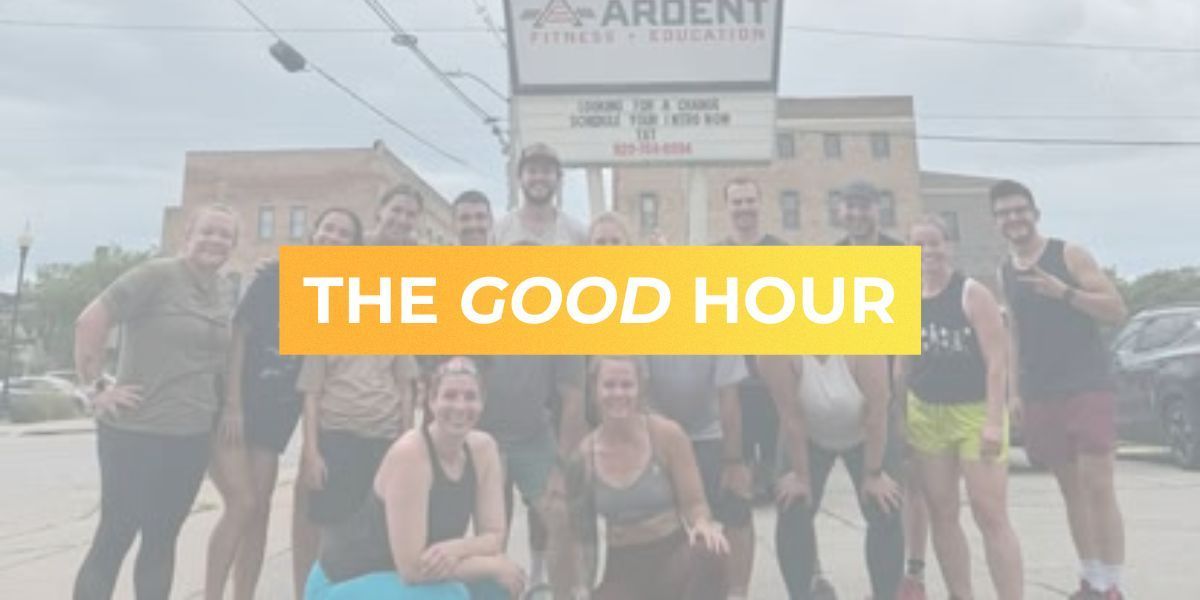
This is why the first 100 days system exists in the shape it does. Every piece of it is aimed at getting those ingredients working for you instead of against you. Over 14 years I have seen amazing friendships form within these walls. Friendships which have outlasted the gym membership and I still get to see them flourish because of social media (maybe the one good thing about it.) I see current and past members taking trips, their kids playing together, being there for each other during the big life moments. Not forced by an institution but forged within a shared space by proximity and choice. It is fucking beautiful and while members come and go, this is the lasting impact of a third space.
What's Next?
If you are already part of a gym community, ours or anyone's, you are sitting on the infrastructure to make a difference. The workout got you in the room, and the friendship part is on you, put yourself out there. It starts embarrassingly small. Adults overestimate how weird it is to go first and underestimate how the person across from you is thinking the same thing. We need to collectively get out of our own heads, throw caution to the wind, because if you are in that late 30s, 40s, 50s…time is ticking and we are on the downhill slide. I personally work on this every day because most of what I write about comes from my own struggles and failings. My own insecurities, troubles, and me not knowing what the fuck I am doing.
If you do not have a third place at all right now, that will chip away at you, and this is not anecdotal. Science. Remember: it is fixable, and not by becoming charming or a low-key sociopath. You fix it by being repeatedly present somewhere, show up and make sure there are people. Here comes the shameless plug, the call to action as they say: We happen to have built a place where connection is a big part of the first 100 days. A system instead of a coin flip, and read part one of this series if you want to understand more.
Day one is a No Sweat Intro. A conversation about your life and what you want, no workout, no sales pitch. Bring the fear that you won't know anyone, your insecurities, and your true self. I will meet you with all of mine too. This is the exact problem this whole place was built to solve, as well as getting you to Live Your Best Life, whatever that looks like for you.
The Third Place Trilogy
Part One
. The First 100 Days
Part Two
. No One Tells You How to Make Friends at 40
(you are here)
Part Three.
Coming soon
The philosophy behind this series:
On Connection, Trains, and What It Means to Be Human
Sources
Friendship as the primary antidote to loneliness, and kindness outperforming self-care for reducing depression, anxiety, and loneliness: UCLA Newsroom, The Science of Human Connection, featuring Jaimie Krems (UCLA Social Minds Lab, Center for Friendship Research) and Naomi Eisenberger's lab.
Close friendship decline, 3% to 12% over three decades: Survey Center on American Life, The State of American Friendship: Change, Challenges, and Loss, 2021.
The third place concept: Ray Oldenburg, The Great Good Place, 1989.
Conditions for friendship formation (proximity, repeated unplanned interaction, settings that encourage letting your guard down): sociological framework often attributed to Rebecca G. Adams and colleagues, widely discussed in adult friendship research.
Survival and mortality figures referenced from Part One: Holt-Lunstad, World Psychiatry, 2024 and PLOS Medicine, 2010.