
July 21, 2026
We Just Call It a Good Hour
This is the text area for this paragraph. Once you've added your content, you can customize its design by using different colors, fonts, font sizes and bullets.
Author
Why one hour in our room connects when an hour on a treadmill next to strangers won’t
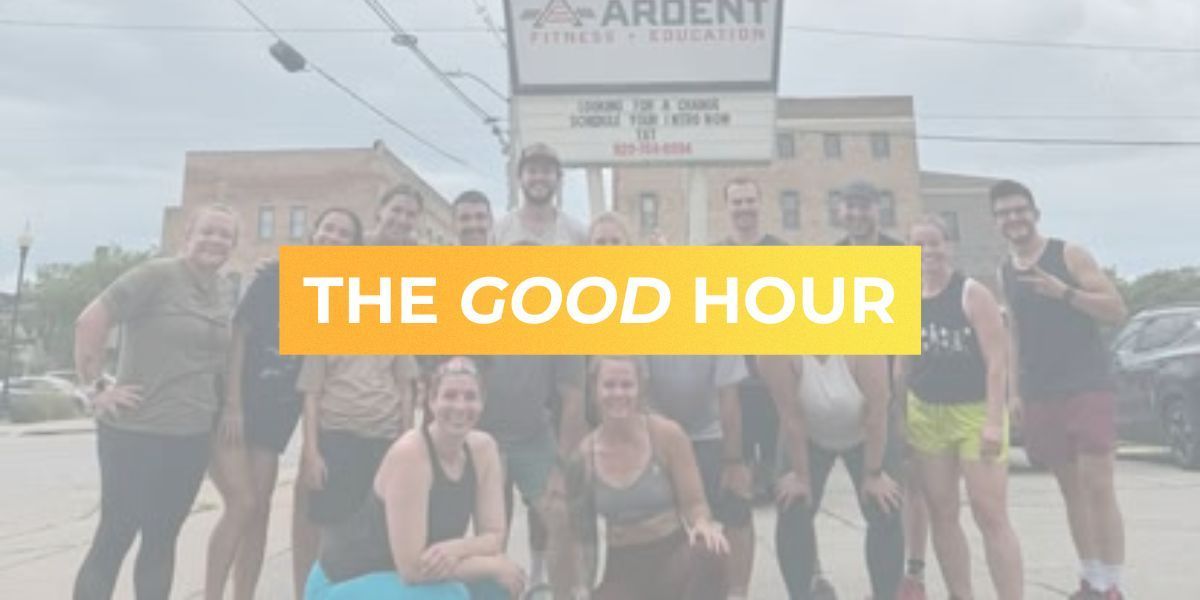
There is a specific kind of tired you feel after a good class. It is not just the physical part, even though that helps. You feel lighter in a way that has nothing to do with the workout, and most people never stop to ask why.
Part One we spoke about the system, the first 100 days that turn a stranger into a regular. Part Two was about friendship, the thing you have to build on purpose after the world stops handing you people. This one is about the hour itself. What is actually happening in those sixty minutes that makes them do more for you than the exercise alone ever could. Health and wellness is not just your bodyfat, VO2max, or resting heart rate.
Because here is the thing that used to perplex me. You can do the exact same workout in two places and walk out a different person. Same movements, same sweat, same sore legs the next day. One version leaves you flat. The other version can fill your cup. For years I could feel the difference without being able to explain it. I have noticed this same attribute in other areas of life as well. Here is an example in another venue. I went to a wedding a few years ago of a good friend I served alongside in Afghanistan. I was at a table of people I hadn't seen in years, and when I left that wedding, my cup was full (those were the exact words I told my wife). I was then at another wedding of a longtime friend a few months later. It was much larger, but I left after having a good time, and it wasn't the same. Well, I found the research, and it turns out the difference is measurable.
Four ingredients
The Third Place, Part Three
Some researchers built a scale to measure how connected people feel during a single interaction, not their life in general, one conversation, one hour. They found that connection comes down to four ingredients. When they are present, you feel it. When they are missing, you do not, no matter how many people are in the room, or how well you know them.
Read them and tell me they do not describe a good class. Shared reality. The sense that you and the people around you are experiencing the same thing at the same time. Not near each other, with each other. A hard workout is a shared reality machine, just like school, the military, or another area we spoke about in the second post of this series.
When the whole room is buried in the same interval, watching the same clock, feeling the same specific effort, you are not 12 individuals anymore. You are one room going through one thing. The treadmill next to a stranger has proximity but no shared reality. You are two people having two separate days that happen to be a few feet apart.
Partner responsiveness. Feeling understood and valued by the people around you. This is the "great job" as someone runs past. The coach who remembers you were nervous about the barbell last week and checks in. The person who racks your weight without being asked. Small stuff, except these acts are not small at all. Being noticed is an ingredient, and a room full of people who notice each other is doing something a room where everyone is wearing headphones waiting for a machine to open never will.
Participant interest. Genuine attention, people who are actually engaged with each other instead of waiting for their turn to talk. You can feel the difference between a room where people are present and a room where everyone is somewhere else. A good class has a current running through it. I am not saying every class will be like this, but we strive to make it happen. When it happens, people are in it, with each other, paying attention. The person next to you will ask you how your weekend in Door County went while you go through a squat session with 5 reps every 2:30 for 5 sets.
Affective experience. The feeling itself, the shared positive charge in the room. The laugh when the coach trips on the dumbbell they left on the floor after demoing a movement (I know because this happened to me). The collective groan when the coach reminds everyone there is still one more round in the workout. Joy, even when it is disguised as shared suffering. This is what we are talking about when we reference good energy, except now we know it is not a mystery. It is a measurable thing you can look for, and we can build it with intent.
You can do the same workout in two places and walk out a different person. The difference is not the workout. It is whether the hour had all four.
The room does this with little to no effort from you
You do not have to be good at connecting to get the benefit. The room does most of the work. I would say, on a personal level, I struggle with this, but I benefit from the shared space and attention involved with our small group classes.
Think about how hard connection is everywhere else in adult life. Part Two covered it. You have to schedule it, drive to it, force it, keep the conversation going. A good class hands you all four ingredients for the price of crossing our threshold. The shared reality and experience is built into the workout. The responsiveness happens because you keep seeing the same faces. The interest and the good feeling come free once the first two are in place. You walk in as yourself and the hour does the rest. Even if you struggle to get in, know that when you leave, you will be in a better place.
As we are all pioneers in this new AI/digital age, this is something no app can copy. An app can give you the workout. It cannot give you a group of other people going through the same interval at 5:10 on a Tuesday. It cannot give you the fist bump, high five, or nudge at the end. You walked in due to the workout, but a good hour can do so much more. A good hour keeps you alive, literally. We put the numbers in Part One of this current trilogy.
the point of this trilogy
Time to land this damn plane.
Part One was the system that gets you in the door and keeps you coming back. Part Two was the friendship that grows once you are here. Part Three is the good hour itself. Three parts, one idea: this place is not a gym that happens to be friendly. It is a third place that happens to have barbells, rowers, and a water fountain (or bubbler, depending on where you are from).
We spent fourteen years building an environment that produces all four ingredients, at first on accident, but now we do it on purpose. Most of those years I could not have told you that is what we were doing. We just knew the room mattered and we protected whatever made it that way. We have had hard conversations when this sacred space was put at risk. Now I have the words for this, and we do it with intention.
Do you need to understand this to feel it? No. Shit, I didn't understand it myself for a while. If you have been in our space for any extended period of time, you have felt it. Days that were a struggle to get out of bed for the 0530 class, sucked it up and came anyway, and you left happy you made the decision to cross our threshold.
We just call it The Good Hour. Well, now we do. We have said stuff about being the best hour of someone's day, or found other catchy names for it. I am going with The Good Hour now. I feel like this phrase truly captures the essence of what we are trying to accomplish.
What to do with all of this great information
Pay attention to it next time you are in. Notice the ebbs and flows of the room and its energy. Notice the conversations, the laughter, the interactions. It may feel like background noise, but this is all a part of the whole experience. An experience which can't be duplicated by an app or just access, at least not yet.
If walking into a room full of strangers sounds like the worst hour of your week, it is possible you haven't walked into the right room. Maybe you have started and stopped working out multiple times, or felt like a wallflower compared to part of the experience. Please don't give up. Even if it is not Ardent, reach out to a coaching gym or personal trainer, set up a time to check it out, and pay attention to how the space makes you feel.
You do not have to be good at any of this. You just have to show up and let the good hour and coaches do their job. We are for anyone but not for everyone. That's why we start with sitting down and having a conversation.
Day one is a No Sweat Intro. A conversation, no workout, no sales pitch. Come find out if we are a place you can experience The Good Hour. If it doesn't feel like we are the right fit, tell us what you are looking for and we will point you in the direction of a trainer or facility which will fit your needs.
The Third Place Trilogy
Part One
. The First 100 Days
Part Two
. No One Tells You How to Make Friends at 40
Part Three.
We Just Call It a Good Hour
(you are here)
The philosophy behind this series:
On Connection, Trains, and What It Means to Be Human
Sources
Friendship as the primary antidote to loneliness, and kindness outperforming self-care for reducing depression, anxiety, and loneliness: UCLA Newsroom, The Science of Human Connection, featuring Jaimie Krems (UCLA Social Minds Lab, Center for Friendship Research) and Naomi Eisenberger's lab.
Close friendship decline, 3% to 12% over three decades: Survey Center on American Life, The State of American Friendship: Change, Challenges, and Loss, 2021.
The third place concept: Ray Oldenburg, The Great Good Place, 1989.
Conditions for friendship formation (proximity, repeated unplanned interaction, settings that encourage letting your guard down): sociological framework often attributed to Rebecca G. Adams and colleagues, widely discussed in adult friendship research.
Survival and mortality figures referenced from Part One: Holt-Lunstad, World Psychiatry, 2024 and PLOS Medicine, 2010.