August 4, 2026
The Clock You Already Run On
This is the text area for this paragraph. Once you've added your content, you can customize its design by using different colors, fonts, font sizes and bullets.
Author
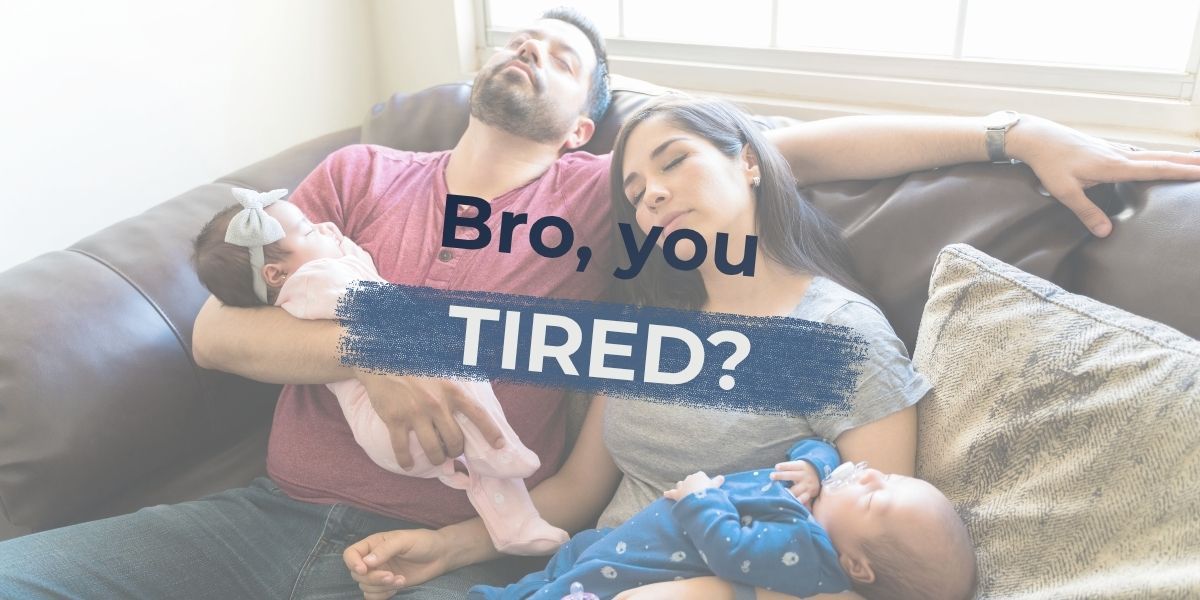
Timing matters more than you think. So does light.
I learned a lot with my time in the military. Sleeping on a schedule was not one of them. I could and can sleep anywhere now. Pile of rocks? No problem.
Training or deployed, the hours were based on the mission.. More rank means more responsibility, mission planning, logistics, which doesn’t translate into better sleep. Up earlier and in bed later, and you tell yourself the story that you are fine because you are getting sleep In some window of time.
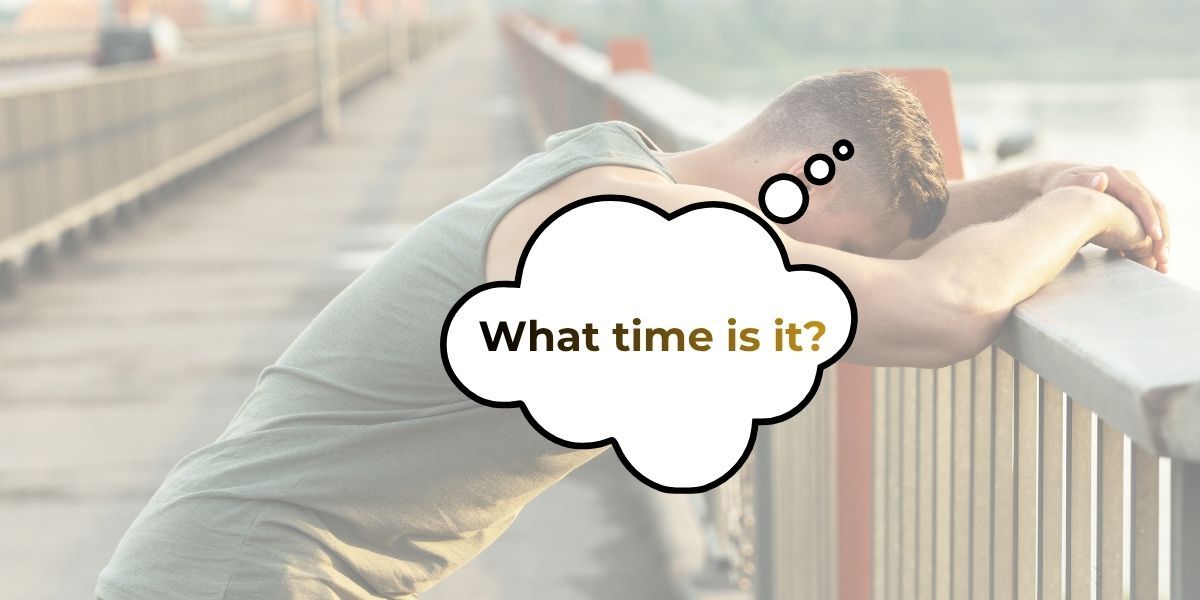
One night we were out on patrol near Kabul. It was either really late or really early, I honestly could not tell you which. I know it was not daylight. We were driving a long stretch of road and I must have nodded off. My driver decided to wake me up by jerking the wheel and slamming my head into the side of the window. I was wearing my helmet, and it was deserved.
I was getting sleep. It just was not connected to anything and not at a great time. It wasn’t a purposeful nap, I didn’t even know I nodded off. Our schedule was all over the place at that time and completely mission dependent.
I thought the number was what mattered. Get 7-9 hours of sleep over the 24 hours and I would be fit as a fiddle.
I was wrong, and the number is not the whole game.
Same seven hours, different results
The Ardent Way: Restoration Part Two of Three
Your body runs on a clock. It is expecting sleep at a certain time, food at a certain time, light at a certain time. When these aspects are scattered, the the sleep you do get has diminishing returns.
This is backed up by science and not anecdotal
A study of nearly 61,000 adults wearing accelerometers found that people with more regular sleep timing had a 20 to 48 percent lower risk of all-cause mortality. Regularity has more of an impact than total hours (Windred et al., Sleep, 2024).
A second study followed more than 73,000 adults for eight years and found irregular sleepers had a 38 percent higher risk of developing type 2 diabetes. Meeting the recommended sleep duration did not cancel that out. People hitting their seven hours on an irregular schedule still carried the elevated risk (Chaput et al., Diabetes Care, 2024).
In the book Why We Sleep by Matthew Walker, PhD (thanks for the book, Nick), Chapter 6 opens with a fake advertisement. It shows a revolutionary new treatment that helps you live longer, sharpens your memory, keeps you slim, lowers your risk of heart attack, stroke, and diabetes, and leaves you happier and less anxious. Then it asks if you are interested. It would be a great ad. In the end, except you would be selling something that is free. Sleep.
The impact of sleep cannot be overstated, and it has a direct effect on every area of your life. How you handle stress, your relationships…litearlly everything.
You can see it play out in sleep loss and car crashes, sleep loss and sport performance, and sleep loss and obesity. A lot of the data infers rather than proves the relationship, but that doesn’t you can dismiss it. Plot average sleep duration against obesity rates in the US over the last fifty years. Obviously there are a lot of factors driving obesity in this country. This is one of them, and this one we do have some agency over.
A meta-analysis pooling multiple long-term studies of children found that the shortest sleepers, around ten hours a night, were 76 percent more likely to be overweight or obese than kids getting about twelve. Every additional hour of sleep was associated with a 21 percent lower risk (Fatima et al., Scientific Reports, 2015). An hour. That is the difference between one more episode and lights out.
Turn off Netflix and go the f*ck to bed and maybe make your kids go to bed.
The catch-up lie
This weekend warrior mentality is bull shit and it is the same psychology people try with nutrition.
Five hours Monday through Friday, then ten on Saturday. Eat well all week, then binge drink and eat like garbage Friday night and Saturday. Average it out and the math may math, maybe even stay inside the boundaries of the Pareto principle. The problem with this is that body does not run on averages. You are throwing a stick in your spokes every weekend while thinking that it does.
Do not get me wrong, I am not telling you to never sleep in. I am telling you that sleeping in until ten on Sunday and then trying to fall asleep at nine that night is a fight you picked with yourself, and it could be the difference between making that 5:30 class on Monday and having the weekend impact the first few days of the week.
I watch this happen on a regular basis
We have a lot of medical professionals at the gym. Doctors, nurses, techs, people who take call. Someone has to be there at three in the morning when your partners appendix bursts at 10pm on Easter and this week that someone is them.
Days, then nights, then a stretch of call where sleep is whatever they can get. It part of the job. This version of this problem is difficult, and I am not going to pretend a blog post fixes it or properly addresses it. What I will say is that when someone in that situation is stuck, spinning their wheels, doing everything right on paper, the schedule is usually a bigger factor than most of the other aspects.
When progress stalls, people focus on their nutrition or their training. They almost never look at their sleep, and rarely their environment.
If you are a client and come in for a 90-day goal session (included in your membership), it is something we talk about. We are not just asking what you eat and how you move. We ask how you sleep. Whether you wake up feeling like you actually slept and ready for the day.
None of that shows up on our InBody scanner. It shows up in other ways, in how you feel, how you interact with people, and your energy levels.
The tool you can use while you are awake
The most useful thing you can do for your sleep happens while you are awake.
Light. I know…anticlimatic.
Researchers put light sensors on nearly 89,000 people for a week. Brighter daytime light was associated with lower all-cause mortality. Brighter nighttime light was associated with higher all-cause mortality (Windred et al., PNAS, 2024).
Light in the day, dark at night. That is the concept, and it sounds too simple to matter. I am keeping it that way. You can go deeper into the weeds if you want, but this is about taking action, so start here.
Oh, Wisconsin…
Our first class is at 5:30 in the morning in Oshkosh. Half the year, there is no such thing as morning light. Our windows face south and west, so even when the sun does come up, we miss out on the direct light.
Unfortunately, our schedules do not move for the seasons, so they try and move the clocks. Could you imagine if a town actually shifted everything based on the light? Or didn’t use time at all or a clock at all? Business hours, school hours, all of it. I would put money on people being happier and healthier, but alas, this doesn’t fit into our contemporary economic landscape. We need the widgets and whats-its and we need them now, regardless of the impact on our health and wellness.
So, in November we set the clocks back again, which means the clock in my truck will be wrong again, and it means a lot of you will be driving to work in the dark and possibly driving home in the dark.
Worth watching
: if the Sunshine Protection Act ever passes and we stay on daylight saving time year round, winter mornings get significantly darker. If you are not proactive about it, that could be a problem. But we can have an optimistic view, a glass half full kind of mentality. Later sunrises mean people who are not natural early risers might actually be awake for one, and get morning light they have never had access to.
Either way, the move is the same. If it is dark when you get up, get outside as soon as the sun is actually up. Drink your coffee outside, or walk the dog, or park at the far end of the lot. Overcast still counts, this concept is easy and free. You don’t need a trainer or a special program, you just go and do it.
Training is sometimes secondary
You may already focus on training every day, so it is worth having a better understanding of why.
Exercise functions as what researchers call a non-photic zeitgeber, a time cue that is not light which can influence circadian rhythms. Regular training can help regulate your internal rhythms, which makes it a potential non-drug tool for circadian problems (Shen et al., Frontiers in Pharmacology, 2023).
There are limits. The same review is clear that the timing specifics are still up for debate, and that whether morning or evening training shifts your clock forward or back depends on the person. Light is the focus point while training is a supporting actor in the scenario.
So the takeaway is to train consistently, at roughly consistent times, and your internal clock benefits from the routine.
Have you ever had a child on a great routine and then gone off script for an event? How did that go for you? They express how they feel outwardly. As adults, we may feel the same, but the expression looks a little different, at least for some of us.
When I was younger, I was wrong
When my sleep was bad, I went looking for a pill, or a supplement. A quick fix which would hopefully allow me to function at a high level without as much sleep.
Medication, whatever was going to knock me out. I did not consider that my pre-sleep routine, or my sleep environment, or the fact that I had no wind-down at all might be doing the damage. I was looking for something to take instead of something to change, because change is freaking hard.
What actually worked was boring and has no resale value, so it does not get talked about as much.
I started planning my bedtime instead of arriving at it by accident. I built an actual wind-down. I dimmed the lights instead of sitting under every bulb in the house until the second I laid down. I changed what and when I was eating before bed. None of it was what I was looking for. I wanted to keep doing what I was doing, and then shut down.
Where we are heading
Part Three
is the point or the series: More is not better. Better is better.
You have been trying to fix your health with movement and food, because those are the two aspects everybody talks about. Is that actually where your problem is? Or would fixing your sleep and your environment move the needle further?
Because it works in that direction too.
Sometimes people cannot find the energy to train until they fix the sleep first.
Health is not a straight line. It is not just move more and eat better. It is also a bedtime, and what you do in the hour before it. The problem is that those fixes are not as much fun to talk about.
Sources
Chaput, J. P., Biswas, R. K., Ahmadi, M., Cistulli, P. A., Sabag, A., St-Onge, M. P., & Stamatakis, E. (2024). Sleep irregularity and the incidence of type 2 diabetes: A device-based prospective study in adults. Diabetes Care, 47(12), 2139–2145.
Fatima, Y., Doi, S. A. R., & Mamun, A. A. (2015). Longitudinal impact of sleep on overweight and obesity in children and adolescents: A systematic review and bias-adjusted meta-analysis. Obesity Reviews, 16(2), 137–149.
Shen, B., Ma, C., Wu, G., Liu, H., Chen, L., & Yang, G. (2023). Effects of exercise on circadian rhythms in humans. Frontiers in Pharmacology, 14, Article 1282357.
Windred, D. P., Burns, A. C., Lane, J. M., Olivier, P., Rutter, M. K., Saxena, R., Phillips, A. J. K., & Cain, S. W. (2024). Brighter nights and darker days predict higher mortality risk: A prospective analysis of personal light exposure in >88,000 individuals. Proceedings of the National Academy of Sciences, 121(43), Article e2405924121.
Windred, D. P., Burns, A. C., Lane, J. M., Saxena, R., Rutter, M. K., Cain, S. W., & Phillips, A. J. K. (2024). Sleep regularity is a stronger predictor of mortality risk than sleep duration: A prospective cohort study. Sleep, 47(1), Article zsad253.