August 12, 2026
You Cannot Buy Your Way Out of This
This is the text area for this paragraph. Once you've added your content, you can customize its design by using different colors, fonts, font sizes and bullets.
Author
Rest is part of the work, not the absence of it.
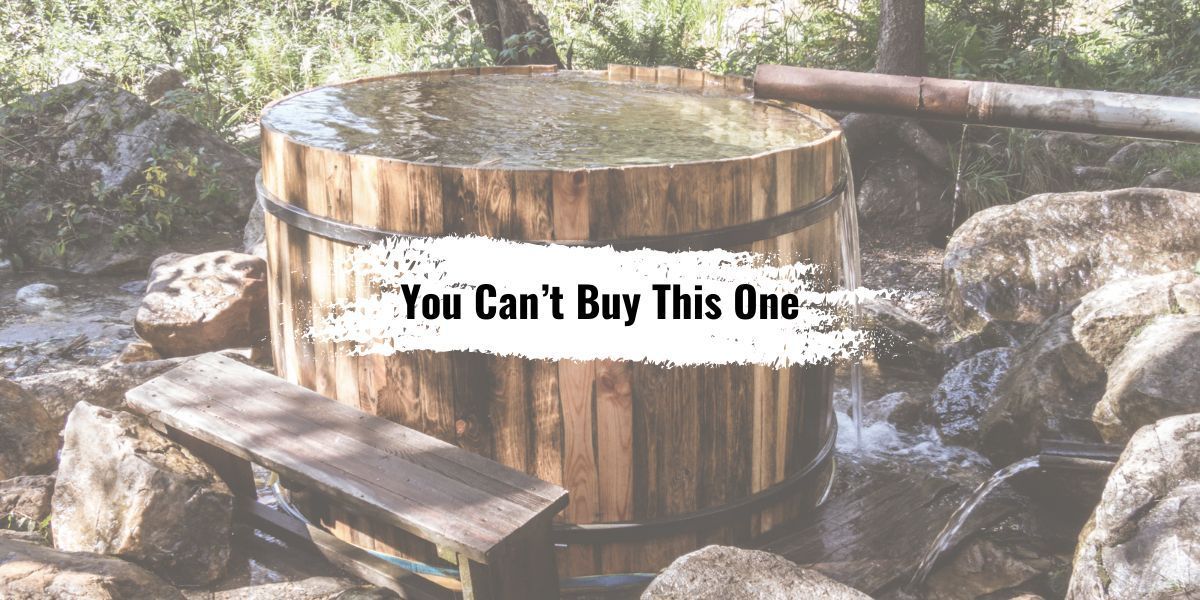
Do you have a cold plunge sitting in your garage? Maybe on your back patio? I know I do.
Maybe you didn’t go cheap and it cost you two grand, maybe more once you add the chiller. Maybe it is just sitting there next to the lawnmower or the edger you never use. I would put money on that, if it is sitting there unused, there is as good chance you do not have a consistent bedtime either. This is not me knocking the cold plunge, I love them, I am just pointing out that we will drop money on recovery and skip the parts which cost nothing. It is the equivalent of the treadmill coat hanger sitting in a lot of basements or home gyms.
This last blog on recovery is about the free shit we have available, why we skip it, and why it matters more as we age.
We already covered sleep, so we are going to move on. If you didn’t read the post about sleep, check it out here. It is one of the biggest things we can do for our mind and body and where a lot of people need to look first.
Food
The Ardent Way: Restoration Part three of Three
You broke your tissue down in a tough session. Now you need to build it back, but you need the material to do that. Unfortunately, it takes more than good intentions.
Training hard but maybe you are eating way under what you should to recover. You wonder why you feel beat up and nothing is really changing. You won’t rebuild anything without giving your body something to rebuild with. And the timing we talked about in Part Two of this series applies here, your body expects food on some kind of schedule. Just like we expect sleep and light, so grazing all day and then nothing, or nothing all day and then everything at nine at night, is another variation of scattered input.
I am not putting numbers or macros into a blog post. That is a conversation and it is situation dependent. Better is better with food, just like with movement, but better is different for everyone.
Stress. All of it, not just the gym
You can try and itemize your stressors in your mind but your body doesn’t give a shit. It doesn’t send you a statement at the end of the month separating workout stress from home stress, from your kid being sick for a week, or your partners work schedule changing so you find yourself trying to piece together pick ups and drop offs, or the conversation with your boss on Tuesday that is still living rent free in your head. It all goes into the same bucket, which is probably overflowing.
This means, the week you may have needed to back off may have had nothing to do with your training. Slept like trash, carrying the weight of the world on your shoulders, and then Thursday hits. The workout is as tough one and you just sent it, and you feel depleted and defeated on Friday. You may blame the workout but that is when you should take a step back.
Look at the entire stressor load, not just the part with weights and movement.
walking
Recovery doesn’t mean sitting on the couch. Go for a walk. Ideally outside, maybe in the morning and get that morning light we already talked about…that is multitasking, optimization, or whatever fancy word you want to connect to it. Go and move at an intensity that doesn’t require its own recovery. Regardless of what that person online is saying or that voice in the back of your head, it counts.
Don’t do the opposite
I have had this conversation a few times with intros. They came from an environment where they would hit a workout a few times in a day, the same workout. I understand how people may logically get there. More work, more results. If one was good, two has to be better. That is just math and it works in other areas of life.
It doesn’t work here. More does not equal better. I am not guessing about this because there is a joint consensus statement from the European College of S[ort Science and the American College of Sports Medicine that addresses this directly. Their position is that training absolutely has to involve overload as a mechanism, but it needs to avoid the combination of excessive overload and inadequate recovery. When this is blundered it becomes non-functional overreaching, meaning your performance will drop and stay dropped. Coming back could take weeks or months (Meeusen et al., European Journal of Sport Science, 2013).
Sometimes rest doesn’t feel like effort and effort is how you prove you are serious, or so they say.
Never missing a workout can turn into an identity. Doing more can be an identity. Being extreme can be an identity. I am saying this from being this, not from a soap box. I have been that guy and I paid the price in all aspects of my life. It is a story we tell ourselves and rest doesn’t have a comfortable place in that story.
It is convenient to tell ourselves as story where the problem is just that we need to work harder when trying harder is something we already do. Deciding not to recover is not discipline. You are leaving adaptation on the table and telling yourself a flattering story to justify it.
This gets more important every year, not less
At 25 you can play this for a while and get away with it. Your body is made to absorb a lot of stupid.
Im not 25 anymore and there is a good chance, based on our demographic, you are not either.
Things change, everything costs a bit more (not an economy joke, but now it is), we recover slower than we once did. A tough session may hang around another day, a night out doesn’t just cost you the next morning but the entire day. All of it feels a bit insulting to be honest, but that is the arrangement. You get older and wiser because you have to, if you don’t you pay the price, and sometimes that price is steep.
This is why the recovery side ends up being the aspect which decides how long you get to keep doing any of this. You can train hard and recover poorly for twenty years, and you will spend a big chunk of those years hurt, backed off, or starting over. Or, hear me out, you can train hard and recover well and add YEARS of training to your life. Not just years of life, even though that will probably happen as well. Years of training. Years being someone who can pick up heavy shit and put it down and then go do something active on a Saturday with your kids or grand kids.
That, my friends, is the point of Restoration. It is time we reframed this concept from doing less to protecting your ability to keep going.
Where we are heading
Restoration was about what happens when you’re not training. Next, is Vitality, the other side of the coin. Getting stronger, moving better, building the engine to do whatever your goal is.
If you are a client, bring this up at your next 90 day goal session. If you are not a client, book a No Sweat and we can talk about where you are and where you want to go.
Sources
Meeusen, R., Duclos, M., Foster, C., Fry, A., Gleeson, M., Nieman, D., Raglin, J., Rietjens, G., Steinacker, J., & Urhausen, A. (2013). Prevention, diagnosis and treatment of the overtraining syndrome: Joint consensus statement of the European College of Sport Science and the American College of Sports Medicine. European Journal of Sport Science, 13(1), 1–24.