Fragmented Attention, Fragmented Presence
Feeling foggy, irritable, or off? It may not be burnout. Learn how fragmented attention affects wellbeing, parenting, and daily life, and how small changes can help.
By
February 1, 2026
%20(1).jpg)
Effects of Parents' Smartphone Use on Children's Emotions, Behavior, and Subjective Well-Being

The impact of smartphone addiction and negative emotions on parent–child relationships among elementary school students
Parental smartphone use and children’s mental outcomes: a neuroscience perspective
Effects of Parents’ Smartphone Use on Children’s Emotions, Behavior, and Subjective Well-Being
Why Feeling “Off” Isn’t a Personal Failure
Most days don’t feel overwhelming in a dramatic way.
They feel foggy.
You move from task to task, check a lot of boxes, respond to messages, handle logistics. By the end of the day, you’re tired, but it doesn’t feel like the good kind of tired. It feels scattered.
Disconnected.
And then it shows up somewhere you didn’t expect.
You snap at your kids over something completely age-appropriate.
You feel irritated by small interruptions.
You notice you’re doing a lot, but not really accomplishing much.
It’s easy to assume something is wrong with you.
That you’re burnt out.
That you’ve lost patience.
That you need to try harder.
But there’s another explanation that doesn’t involve personal failure.
What many people are experiencing right now isn’t physical exhaustion or lack of motivation. It’s fragmentation.
Your attention never fully settles.
It’s pulled in dozens of small directions throughout the day. Notifications, messages, headlines, feeds, updates. Even when you’re present physically, part of your mind is somewhere else.
That constant partial attention comes with a cost:
We don’t usually talk about this as a health issue. But it is.
Because attention sits upstream of nearly everything else. Learning, recovery, relationships, emotional regulation, and how meaningful life feels day to day.
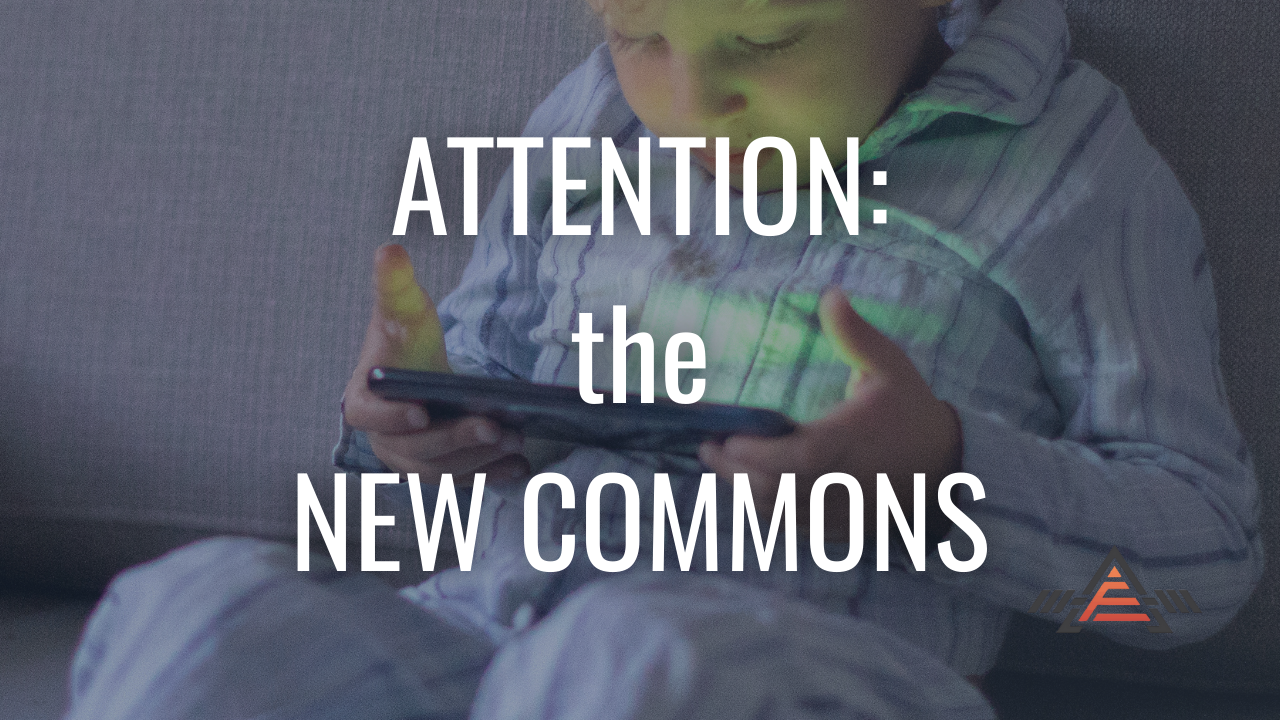
If you want a clear mirror for fragmented attention, spend time with kids.
Children don’t need constant entertainment.
They don’t need perfect parents.
.png)
But they do feel the difference between presence and partial presence.
What often gets framed as kids and screen time might actually be something else.
It may not be the amount of time kids spend on screens that’s causing tension. It may be how often adults are half-present while with them.
A parent scrolling doesn’t look neutral to a child. It looks like absence.
That absence doesn’t show up as a single moment. It shows up as friction, dysregulation, and short fuses on both sides.
This isn’t about blame. It’s about noticing cause and effect.
Nothing Is Wrong With You.
Read that last part again because this part matters.
Nothing is wrong with you.
We are not meant to experience life in a constant state of interruption. Human nervous systems evolved in environments where attention had time to settle. Where transitions were slower. Where information arrived at a human pace.
Modern systems do not operate at that pace.
Our attention is being pulled apart by design, not by accident.
Attention has become one of the most valuable resources in the modern world.
Entire business models depend on keeping your eyes on a screen for as long as possible. The goal isn’t just to show you content you like. It’s to keep you scrolling, checking, refreshing.
Friction was removed on purpose.
Every tap, swipe, and notification is engineered to reduce effort and increase engagement. Not because anyone is evil, but because incentives reward time-on-device.
The outcome, however, is predictable:
And then we internalize the symptoms as personal failure.
Why Fragmentation Feels Like Something Is “Off”
When attention is constantly interrupted, it never fully recovers.
You’re not resting deeply.
You’re not focusing deeply.
You’re not present deeply.
Over time, this creates:
People often try to solve this downstream with more discipline, better routines, or productivity hacks.
But the issue is upstream.
Reclaiming attention doesn’t require deleting technology or opting out of modern life. That isn’t realistic.
It does require intentional friction.
One simple example is removing social media apps from your phone.
Not deleting accounts.
Not making an announcement.
Just making access require a decision.
That small barrier creates a pause.
And that pause matters.
It’s not about wasting time less. It’s about noticing what you’re not doing while scrolling. What conversations are interrupted. What moments are thinned out. What attention never fully lands.
This doesn’t have to be a grand gesture.
It can be a quiet experiment.
Add a little friction.
Observe what changes.
Start Paying Attention to Attention
Attention is an asset, whether we treat it like one or not.
When we don’t protect it, other systems will happily use it for us.
The goal isn’t perfection.
It’s awareness.
Because once you see fragmentation clearly, you stop blaming yourself for it. And once you stop blaming yourself, you can start designing your life a little more intentionally.
We will link research at the bottom (or side if on a computer) of this post that explores how parent screen time and digital distraction impact child behavior, emotional regulation, and parent-child relationships for those who want to go deeper.
If this resonated, the next step isn’t more willpower.
It’s better design.
A No Sweat Intro is a calm, no-pressure conversation where we talk through goals, routines, and where small changes could make daily life feel less scattered and more intentional.
No workout.
No sales pitch.
Just clarity.
Schedule a No Sweat Intro
.jpg)
.jpg)
.jpg)

.jpg)
.jpg)
.jpg)
.jpg)

.jpg)
.png)
.jpg)
.png)
.jpg)
.png)
.png)



.png)
.png)


.png)


%20(Instagram%20Post).png)
.jpg)


.png)

.png)