Why Most People Don’t Need More Motivation. They Need a Better Starting Point.
Most people don't fail because of laziness or lack of motivation. They fail because they start4 in wayus that don't fit real life. Here's why.
By
December 21, 2025
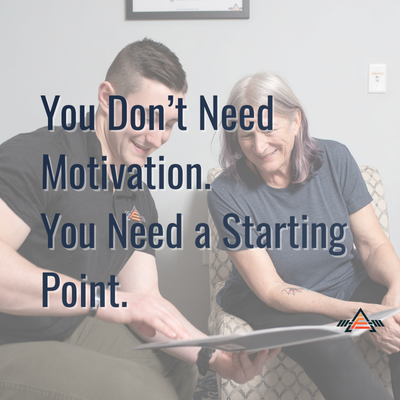

They struggle because they keep being asked to start in ways that don’t match real life.
Think about how most programs begin. Big goals. Big promises. Big energy. A long list of things you’re supposed to change immediately. The assumption is that if you care enough, you’ll figure it out.
That works for a short time. Then life shows up.
Stress increases. Schedules shift. Sleep gets off. Motivation dips. And suddenly it feels like you’re “failing,” even though nothing unusual is happening. You’re just human.
The problem isn’t motivation. Motivation is unreliable by design. It comes and goes. The problem is that most programs are built as if motivation is a stable resource you can draw from whenever you need it.
It isn’t.
Real change happens when the starting point reduces friction instead of demanding willpower. When the first steps create clarity instead of pressure. When early progress builds confidence instead of comparison.
It answers basic questions most people never get help with:
Where should I actually focus first?
What matters right now, and what can wait?
How do I make progress without overhauling my entire life?
When those questions are clear, momentum comes naturally. Not because you’re more disciplined, but because the path makes sense.
This is especially important early on. The beginning of any change process is fragile. If the starting point is too intense, too rigid, or too vague, people burn out before they ever experience a win.
That’s why sustainable programs start with understanding, not action for action’s sake. They create early success through simplicity. They help people build trust in the process and in themselves.
You don’t need a harder push.
You don’t need more rules.
You don’t need to “want it” more.
You need a starting point that works with your life instead of against it.
That belief is what shaped how we built Start Strong. Not as a reset, a challenge, or a test of discipline, but as a structured way to begin that supports real humans with real constraints.
Because how you start matters.

And most people don’t need more motivation.
They need a better place to begin.
If you need a better starting point, schedule a sit down and lets make it happen.
.jpg)
.jpg)
.jpg)
.jpg)

.jpg)
.jpg)
.jpg)
.jpg)

.jpg)
.png)
.jpg)
.png)
%20(1).jpg)
.jpg)
.png)
.png)


.png)
.png)


.png)


%20(Instagram%20Post).png)
.jpg)


.png)

.png)