You Don't Have a Willpower Problem | Ardent Fitness
Most weight loss fails for the same reason. Not willpower. Not discipline. You're in the middle of a transition and nobody gave you a map. Here's what actually changes things.
By
March 9, 2026
.jpg)

I want to tell you about someone I know pretty well.
She's done everything right, on paper.
She joined a gym. She downloaded the app. She bought the meal prep containers, followed the influencer, cut the carbs, tried the fasting window, counted the points, took the before photo, wrote the goal on a sticky note and put it on her bathroom mirror.
And every single time, it worked. For a while.
And every single time, something happened. Life got loud. Stress hit. She missed a few days. She ate the pizza. She felt ashamed. She stopped going. She told herself she'd start again Monday.
Monday became next month. Next month became next year.
Sound familiar?
I've sat across from hundreds of people who've told me some version of this story. And almost every one of them said the same thing at the end of it.
And here is what I want to say to every single one of them.
That is not your diagnosis.
That is the industry's failure, dressed up as your character flaw.
Obesity costs the US healthcare system almost $173 billion a year.
That number should stop you cold for a second.
If any of it actually worked long-term, the industry would shrink. Instead, it grows every year.
Think about that.
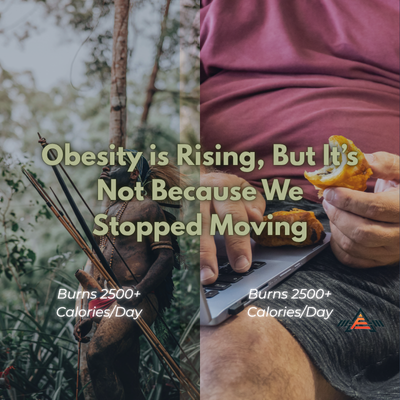
We have more access to diet plans, fitness apps, personal training content, metabolic research, meal delivery services, and motivational content than at any point in human history. And obesity rates have not improved. By most measures, they've gotten worse.
That is not a coincidence. That is a business model.
The industry profits from your failure. Repeat customers are the backbone of the diet business. Every January is built on the assumption that most people will quit by February, feel bad about it, and come back next January to buy again.
This is not me being cynical. This is just math.
And the way they keep you coming back is by getting you to believe the problem is you. Your willpower. Your laziness. Your lack of discipline. Your bad relationship with food. Your metabolism. Your choices.
That framing is a trap. And most of us have been living inside it for years.
Here's what I've learned after twelve years of coaching people through real, lasting change.
Most people don't fail at weight loss because they lack discipline.
They fail because they're trying to change their body while standing in the middle of a life transition, with no map and no support structure.
Let me explain what I mean.
I became interested in a concept called liminal space years ago, doing graduate research on chronic pain and transition in veterans. The word comes from the Latin for threshold. It's the in-between place.
Anthropologist Arnold Van Gennep studied it. Victor Turner wrote about it. But it's not abstract theory. You've lived it.
It's the space between who you were and who you're becoming. The feeling of being stuck. Of having outgrown something but not yet knowing what's next. The gap between the life you have and the life you're trying to build.
Weight loss sits right in the middle of that gap for most people.
They're not just trying to eat less and move more. They're trying to become a different version of themselves. A version that wakes up early. That cooks at home. That says no to the thing that used to feel like comfort. That trusts their body. That actually believes they can do this.
That is not a calorie problem.
That is an identity problem.
And identity problems require identity solutions, not another meal plan.
Research on behavior change is pretty clear on one thing:
willpower is not a reliable strategy.
It's a finite resource. It depletes under stress. It's the first thing to go when sleep is bad, schedules are full, or emotions are running high.
Ironically, the people who are most stressed, most sleep-deprived, and most overwhelmed by life are the same people most likely to be trying to lose weight. And they're leaning hardest on willpower to do it.
That's not a character flaw. That's a setup for failure.
Research on behavior change breaks down into four levers: Awareness, Motivation, Skills, and Opportunity. Most gyms and diet programs camp out at the first two. They educate you. They motivate you. They send inspirational content and accountability challenges.
But awareness covers about 5% of the behavior change equation. Motivation gets you to maybe 30%.
The other 65%? That's skills and opportunity. The actual environment you live in. The structure around you. The community supporting you. The systems that make healthy behavior the path of least resistance instead of the one that requires constant effort.
When you fail on willpower, it's not because you lacked internal drive. It's because the external structure wasn't built to support you.
There's something else worth naming here, because I've watched it destroy more progress than missed workouts ever have.
Weight stigma is real, it's documented, and it makes weight loss harder, not easier.
When people internalize the message that their body is a moral failure, they don't get more motivated. They get more avoidant. More anxious. More likely to use food for emotional regulation and less likely to seek out the support they actually need.
Shame is not a fat burner. It never has been.
What actually creates change is a shift in how you see yourself. Not as someone who is broken and needs to be fixed. But as someone who is mid-transition and needs better tools for the crossing.
You are not a failure. You are in between.
Between who you used to be and who you're trying to become. And the space between those two things is the hardest place to stand.
We talk about macros and calorie deficits and progressive overload. Those things matter. We'll get to them in this series. But none of them work until we get honest about the actual starting point.
You are in a threshold moment. The question is not whether you have enough willpower to drag yourself across it alone. The question is whether you have the right structure, the right community, and the right system on the other side.
Over the next three weeks, we're going to take weight loss apart and rebuild it through the Ardent Way.
That means going beyond what the industry tells you to focus on. We're going to look at all four pillars of what actually drives lasting change.
Vitality. Resilience. Connection. Restoration.
Each one plays a specific role in fat loss that most people never hear about. Each one has solid research behind it. Together, they form a system that doesn't require you to white-knuckle your way through life to keep the weight off.
Next week, we break down each pillar and what it actually means for your fat loss specifically.
For now, sit with this one idea.
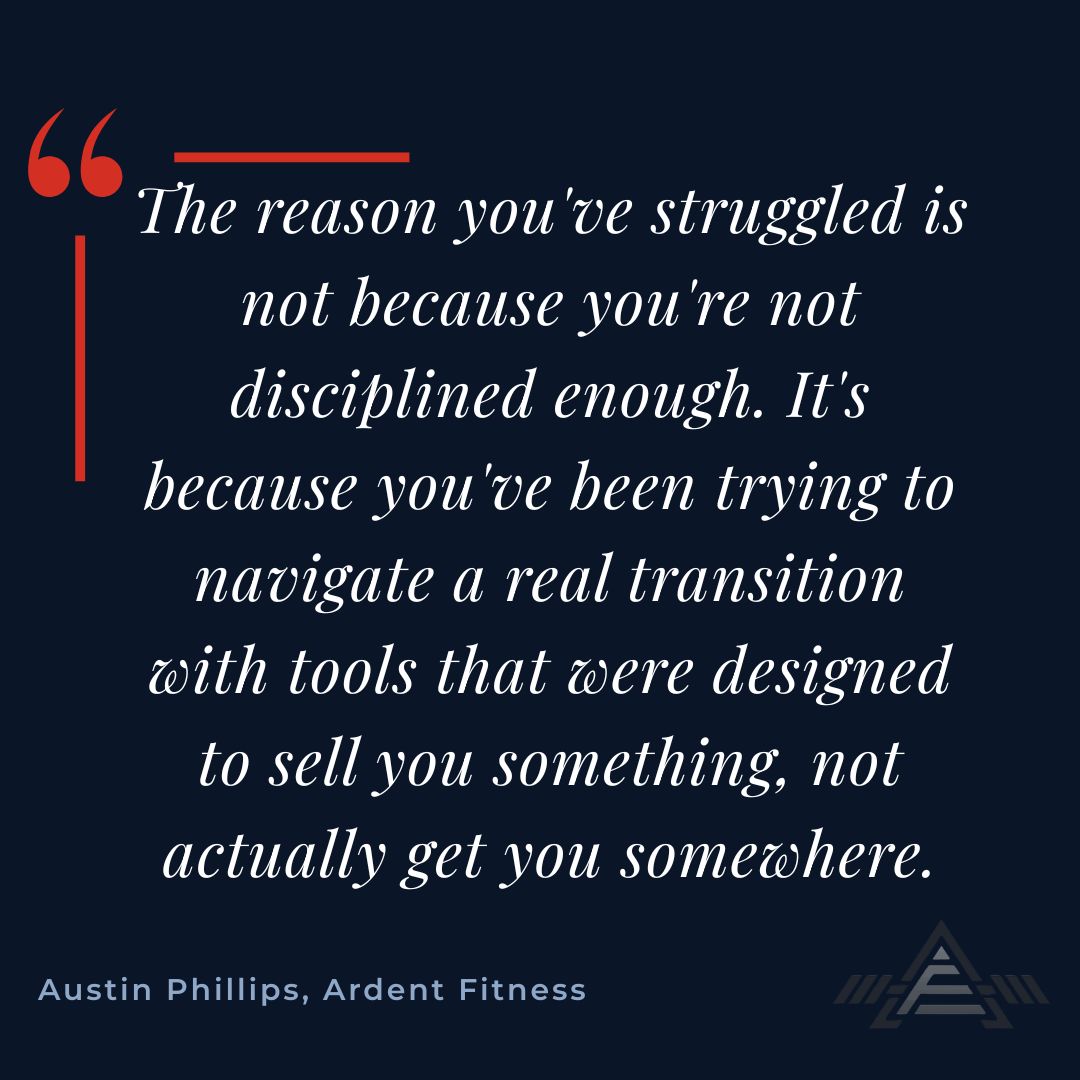
That changes today.
Austin Phillips
Ardent Fitness | Oshkosh, WI | ardentoshkosh.com

.jpg)
.jpg)

.jpg)

.jpg)
.jpg)
.jpg)

.png)
.jpg)
.png)
%20(1).jpg)
.jpg)

.png)
.png)


.png)
.png)


.png)


%20(Instagram%20Post).png)
.jpg)


.png)


.png)