Weights and Balances • Part Three of Three
Tip the Scale This Week
You have the why. This is the part where you actually do something with it.
I had it all figured out. I was going to change everything at once, the whole trajectory, the whole me.
About a year ago I decided to fix it all in one shot. I made the checklists and built the schedules and tried to cram the gym, school work, being a present partner, and being a kick ass parent into a calendar that had no white space left on it anywhere, minus the 8 hours of sleep I was apparently still going to get every night. It was optimized and color coded and, honestly, beautiful.
It lasted a week. Maybe. I spent more time making the monstrosity then actually following it...
Then the negotiating started, just this one thing off the list today. Then two. Then the list was more of a suggestion, and then I'm not sure there was a list at all, and I was right back where I started except now I also got to feel like a failure about the list I'd spent a weekend building.
Cool, that is always fun.
I wrote the first two posts in this series. I know this trap by name, and I walked straight into it anyway, because knowing the theory does not make you immune to being a human with a calendar app and good intentions.
Small adds up
Darren Hardy wrote a whole book on this, the compound effect. Small stuff you repeat enough times piles up into big results, which is both true and boring as hell, and the boring is probably why nobody talks about it. There is no before and after photo for "drank water consistently for eight months." It isn't sexy enough for the quick hit videos feeding the never ending puking of content online.
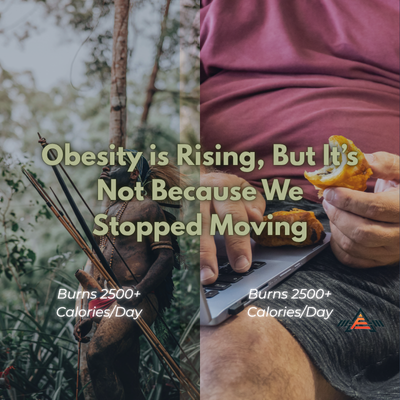
But this is the engine, electric because it is quiet and needs charged every night, sitting under everything else. Remember the spectrum from part one? You do not lurch from one end to the other. You tilt it, a little, in the right direction, often enough that it actually starts to move. The guy on the right in that photo from part two did not overhaul his life. He tipped it over and over, some of it good and some of it bad, for years, and because it landed more good than bad, here I am writing this.
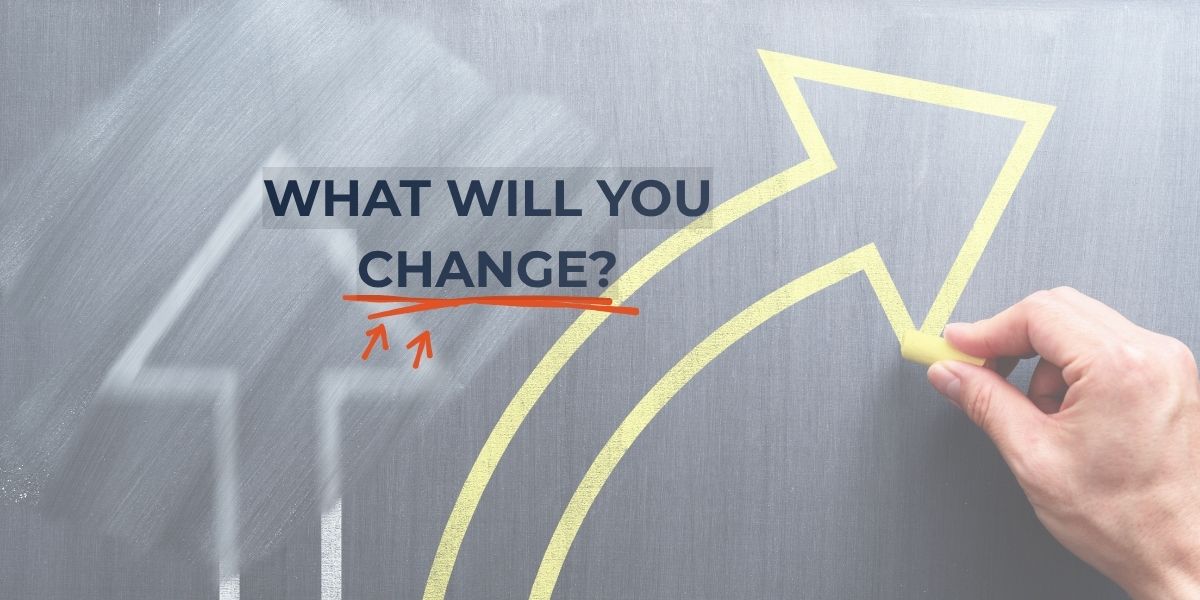
You do not need a new life. You need to tip the one you already have, a little, in the right direction, often enough that it adds up.
Don't fix everything. Fix one thing that will start to tip the scale.
You have heard of the 80/20 rule even if you did not know it had a name (it is Pareto, an Italian economist, do not worry about it). Roughly, a small slice of your inputs drives most of your results. The problem is that most people believe they have to do all of it, and that false narrative has somehow wiggled its way into foundational thinking in the health field. Not from the people writing peer-reviewed papers, running double-blind studies, and actually advancing the science. From influencers with huge followings who imprint snapshots of their lives onto the public for financial gain.
So here is the key to success, right now. Find the one or two things that move the most for you and tip those first.
For most people that is not the perfect training program. It is sleep, or water, or walking, or the people you spend your time around, the unsexy foundational stuff that everything else gets stacked on top of. Find your big lever, pull that one, and leave the rest alone for now.
Here is what I actually did
I'll show you my work, since I'm not going to tell you to do something I haven't. The phone went first. Once I started watching where my attention actually went, and it was nowhere good, social media came off it. The stuff quietly robbing the parts of my life that mattered, I put friction in front of. Then I picked one lever to start, the one I figured moved the most, and for me that was sleep. Got it into a rhythm, not a perfect one, just better than the train wreck it was. Then water. Got that handled. Only then did I touch food, and even now I am not weighing or measuring a single thing, I am just paying attention. One layer at a time.
I have hit about 90% of my workouts for the last month. Not 100. Life happened, a day got missed here and there, the world kept spinning and no one shunned me. And somewhere in there a weird thing happened that I never wrote on any checklist. Stuff that used to set me off emotionally just didn't anymore. Same triggers, different me. That is the compound effect showing up in a place I never aimed it.
You tip the physical scale and the other ones quietly start to lean with it.
What we would tell you
When someone walks into Ardent for the first time, they almost never need a training program. They need to walk through the door. So that is the entire first ask, show up three times a week, and that's it. It's the lever. Simple, not easy.
We do discuss nutrition, but we layer it in, we don't dump a five-part wellness plan on you on day one. We get you a rhythm of showing up first, because showing up is the thing the whole rest of it hangs on, and only once that rhythm is real do we start adding layers. Maybe you are already consistent and you are after a new challenge, in which case we pull a different lever and start looking at the other corners of your life through our Liminal Health Survey. Same intention, but the plan is built around you, which Chris Cooper and Two-Brain Business call the Prescriptive Model.
An influencer hands you their whole life and tells you to copy it. A gym hands you the program everybody else gets. A coach hands you your own life back with a little structure on it, one layer at a time.
How to weigh your own scale this week
You can run this on yourself right now. Two minutes, zero equipment.
Ask where you actually are on the spectrum today. Honestly. Not where you wish you were, not where you were five years ago. Today. Ease or dis-ease. If you haven't read the post about the spectrum, here it is.
Then pick one aligned input to add. Just one, something that tilts you toward ease.
Then pick one misaligned input to ease off of. Not delete, not nuke it from existance, just ease off a bit, because the all or nothing move is the exact thing that killed my beautiful color coded calendar. I will talk about a personal one, almost ten years ago I decided to cut back on alcohol. I won't bore you with the back story, but I went to maybe 2-3 drinks in a sitting, out with friends, never every night or even every week, because I could never really grasp social drinking anyway. A few years of that, and then I just quit entirely. I knew I needed to make a change and I made it in a way that actually stuck. I don't drink now, don't want to, don't need to, and that one change has quietly tipped the scale in a dozen other corners of my life I wasn't even aiming at.
Small changes.
So once you know your move, ask the only question that matters. Does this fit my actual life? If it doesn't fit your real life it won't survive contact with a normal Tuesday, and you already know that, because you've tried the version that didn't fit and watched it fall apart.
And make the add small. Embarrassingly small. So small you can't talk yourself out of it on a bad day, because the bad days are the whole point. If you can do the thing on the bad days, you win.
Make it so small you cannot fail. The good does not have to crush the bad. It just has to outweigh it, often enough, in the directions that matter to you.
Water is a good place to start, and not for the reason you'd guess. The research on hydration has actually shifted over the last decade, away from "drink up so you can perform" and toward what your everyday intake quietly does to your body over the long haul. This is not the old "you are secretly dehydrated" scare line, there isn't much evidence most healthy people are walking around dehydrated. It's the slower, less interesting version. Habitually under-drinking carries a real cost over time to things like kidney and metabolic health, the stuff that doesn't show up tomorrow but will absolutely show up eventually. So water isn't really a performance drink at all. It's a slow payout that quietly works in your favor, which is exactly what makes it such a good first tip.
So, small enough to not fail. One glass of water when you wake up, before you touch your phone or your coffee or let the day get its hands on you. It sounds stupid simple, and it is, and most people still won't do it.
Five things you can add this week without blowing up your life
Pick one. Not five. One.
- One glass of water the moment you wake up, before the phone.
- A ten to fifteen minute walk. After a meal, on a call, whenever. It is not a workout, that's the point.
- Pick a bedtime and protect it like it's your kid. Sleep is the lever almost everything else sits on.
- Take social media off your phone, or at the very least kill the notifications. This one gave me back more than I expected. (Yes, I know, you are reading this because we posted it on social media. The irony is not lost on me. Read it, then put the phone down.)
- Show up three times a week. Just walk through the door. We will handle the rest once you've got a rhythm.
And now this
The first two posts were the easy part, the permission part. Stop chasing perfect, stop grading yourself on a scorecard built to make you quit, stop treating willpower like a character trait you got skipped over on at birth. All of it true, all of it necessary, and none of it the actual point.
The point is moving the needle.
There's a name for the belief that your own actions actually move that needle. It's called self-efficacy, and it turns out to be one of the better predictors of whether you stick with anything at all. The catch is you can't think your way into it. You build it with small wins you can actually see, one at a time, because you cannot reason yourself into believing you can change. You have to go show yourself a little proof. This week is how you grab the first piece of it.
So how do you eat an elephant? Same answer as part one. One bite at a time.
You don't need a new life or a new plan or some shinier version of yourself. You're already on the spectrum and the needle's already moving, you don't get to opt out of that part. So pick one thing and tip it this week.
I want the gym to support your life, not your life to support the gym.
Reading three blog posts changed nothing. I mean that with love. The thinking was the warm-up. Pick one thing off that list and go do it this week, that's the whole ask. And if you want help figuring out which lever is actually yours, the one that moves the most for the life you are actually living, that is the entire reason a No Sweat Intro exists. You talk, we listen, we find your one tip, and we build from there. No checklist that dies in a week. No borrowed life. Yours.
Book a No Sweat Intro
Or keep it simple. Reply BALANCE and we will find a time. Then go drink a glass of water.
Sources
The compound effect, small consistent choices compounding into large results: Darren Hardy, The Compound Effect (2010).
The 80/20 idea comes from the Pareto principle, after economist Vilfredo Pareto.
The shift in hydration research from a performance focus toward long-term health, and the evidence that habitually low water intake carries a cost to kidney and metabolic health even in otherwise healthy people: Perrier ET, Shifting Focus: From Hydration for Performance to Hydration for Health, Annals of Nutrition and Metabolism, 2017. DOI 10.1159/000462996.
Self-efficacy, the belief that your actions can produce the outcome you are after, and its role in sustained behavior change: Bandura, 1977. Overview from the American Psychological Association: apa.org/research-practice/conduct-research/self-efficacy-human-agency.

.jpg)
.jpg)
.jpg)
.jpg)

.jpg)

.jpg)
.jpg)
.jpg)

.jpg)
.png)
.jpg)
.png)
%20(1).jpg)
.jpg)

.png)
.png)



.png)
.png)


.png)


%20(Instagram%20Post).png)
.jpg)


.png)


.png)